September 30, 2026
4 minutes reading time
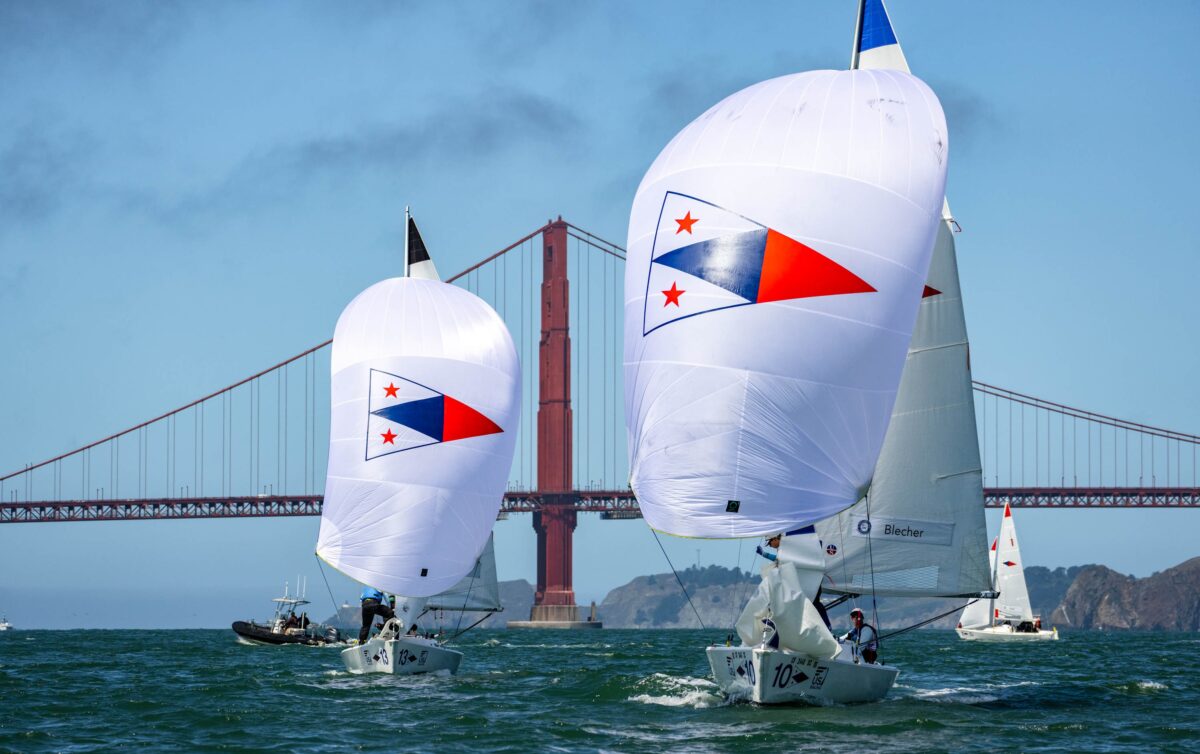
The regatta will feature 12 of the world’s best women’s match racing teams — hailing from seven countries and representing 10 yacht clubs — and it is expected to deliver some of the year’s most tactical sailing.
“Racing in identical J/22s supplied by St. Francis Yacht Club means that boat handling, tactical errors, and misreading the wind on San Francisco Bay’s tide-heavy racecourse will quickly expose small mistakes, making every match unpredictable,” said World Sailing President Quanhai Li. “The format of the four-day event also helps to increase the level of competition and unpredictability. Each race is important and tests each crew’s endurance, their adaptability to changing tidal currents, and their boat handling in heavy breeze.”
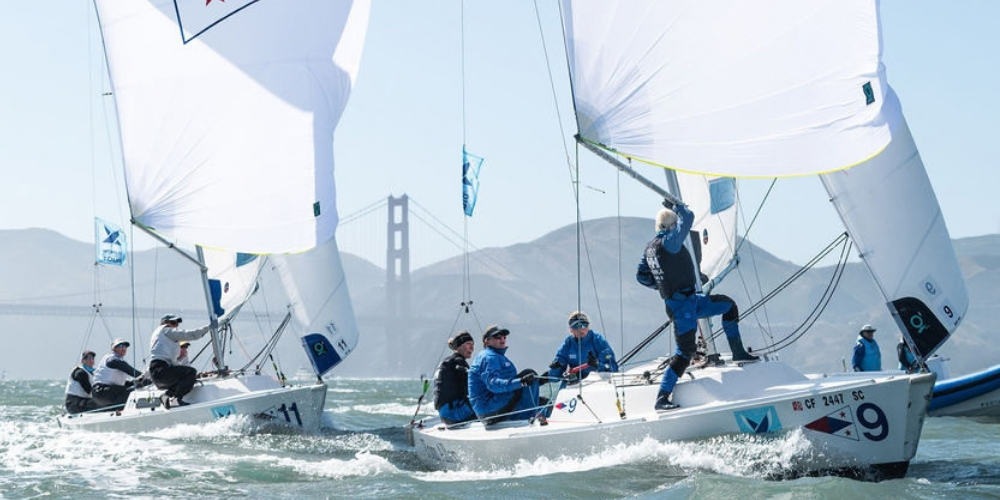
The 2026 World Sailing Women’s Match Racing World Championship will use a six-stage format that, depending on conditions, will be contested on StFYC’s spectator-friendly City Front racecourse.
The first stage will feature a round-robin format in which all 12 competing teams will face one another. Teams will earn one point for each match won, and after the round-robin is complete, the eight highest-scoring teams will advance to the quarterfinals, while the other four teams will flake their sails.
The quarterfinals will pit the top eight teams against each other, based on their round-robin rankings. The first four teams to win at least three matches will advance to the semifinals, while the remaining four teams will compete in a separate stage to determine positions five through eight in the world championship’s final standings.
In the semifinals, the team with the highest ranking from the round-robin will compete against their selected opponent, while the other two teams will meet on their own starting line. Again, the first two teams to win at least three matches will advance to the finals, while the other two teams will move on to compete in a separate bronze-medal match to determine positions three and four in the regatta’s final results.
Finally, the two top teams will square off in the Grand Final. The first team to win three matches claims the world championship title, while the other must settle for the podium’s second highest step.
While each team is assigned one of StFYC’s identical J/22s, boats may be exchanged in the knock-out stages to further ensure parity.
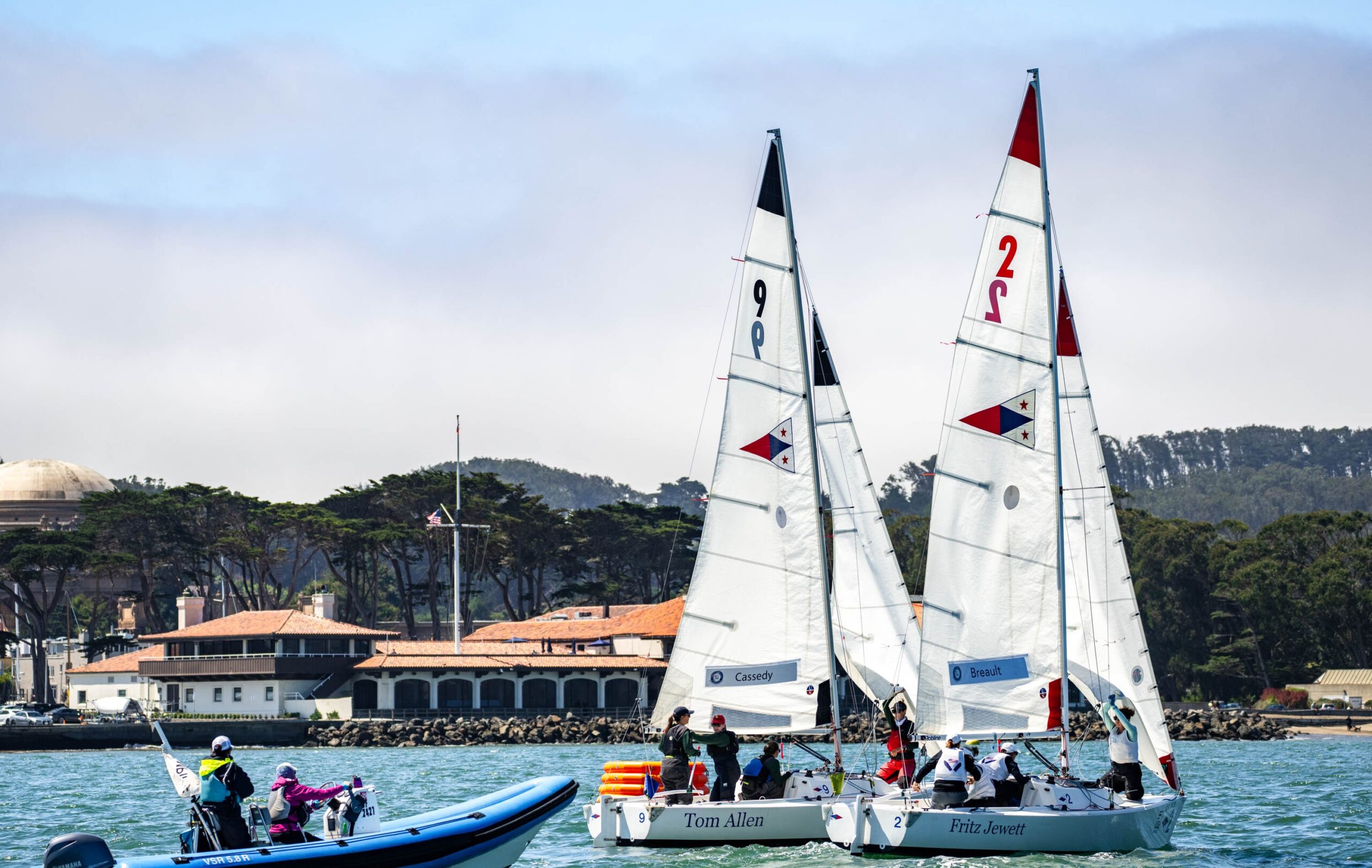
The regatta’s challenging format and location will determine if skipper Pauline Courtois (FRA) and her Match in Pink by Normandy Elite Team (Maëlenn Lemaitre, Louise Acker and Laurane Mettraux), who are representing France’s Club de Voile Saint-Aubin Elbeuf, can defend their five consecutive world championship titles.
“I expect a very tight competition,” said Courtois. “There are many experienced and strong teams, and I think the level between the different crews will be very close. Every race will matter, and small details could make the difference.”
While San Francisco Bay is famous for its breeze and challenging tides, these are well-known factors to the Match in Pink by Normandy Elite Team. “We have fairly similar conditions at home in Le Havre,” said Courtois, who has raced on the Bay twice before.
Instead, Courtois points to StFYC’s J/22 fleet as her team’s potential crux.
“In France, we don’t have a symmetrical-spinnaker boat available for regular training, so we have less opportunity to practice with this type of setup,” she added. “It makes the boat quite challenging for us, and adapting quickly to it will be an important part of our preparation.”
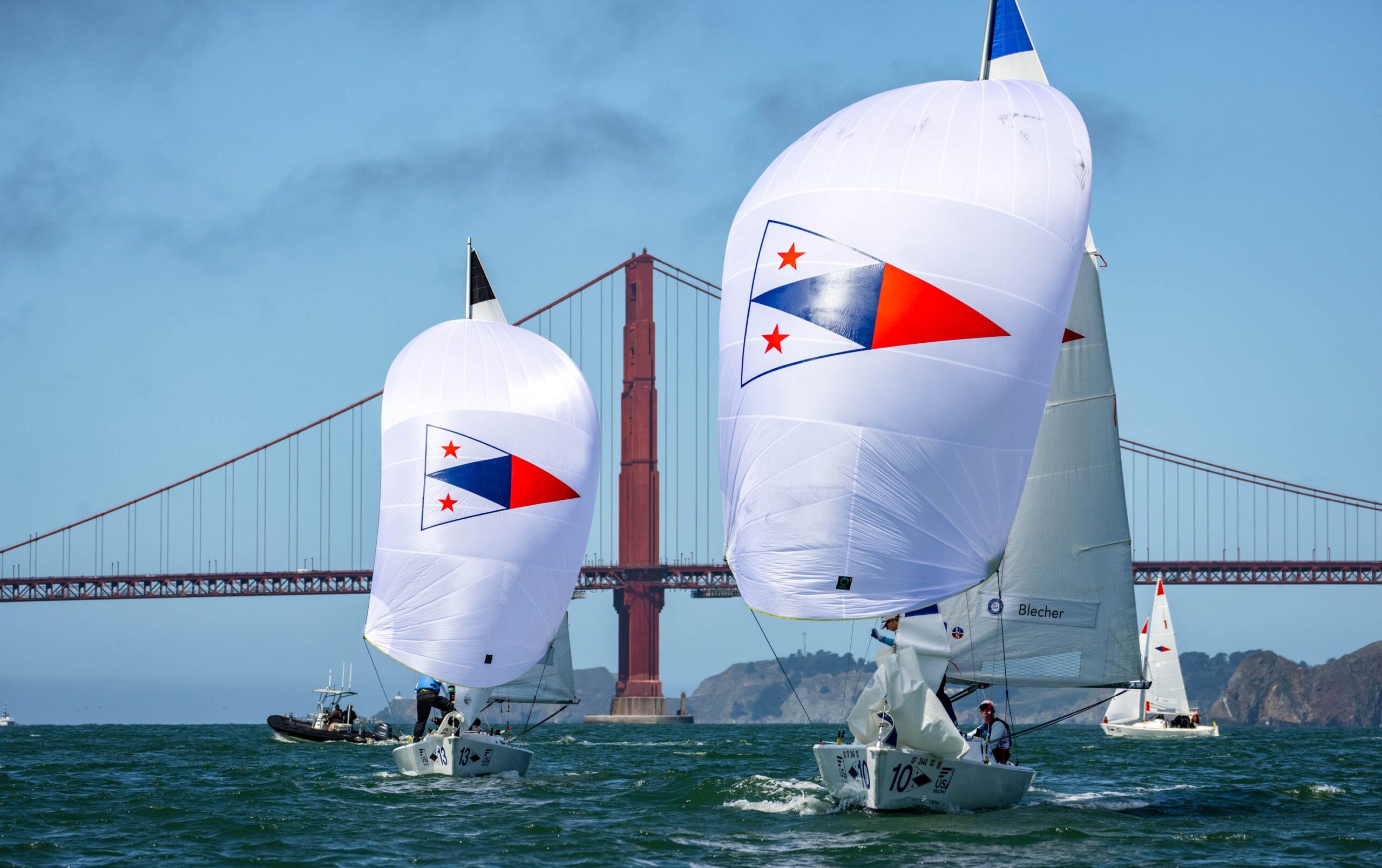
Kites aside, skipper Allie Blecher (USA) of Team BAAM! (Evan Cahill, Rose Edwards and Aimee Famularo), who is representing the California Yacht Club, said the Match in Pink by Normandy Elite Team will be tough to beat. “One little mishap and Pauline will recognise your fault, and boom,” she said.
While Blecher hails from Southern California, she has sailed a lot on the Bay and describes it as a home court. “The Bay can throw pretty much anything at you, so even some of the world’s best sailors may struggle,” Blecher said. “It’s a venue that brings out the best and the worst in everything, which is why I like it.”
All factors considered, Blecher said this year’s World Sailing Women’s Match Racing World Championship title is anybody’s game.
“Everybody’s beatable – I’ve beaten Pauline, Nicole’s beaten her,” said Blecher, referring to Nicole Breault (USA) and her Vela Racing Team (Molly Carapiet, Hailey Thompson and Molly Vandemoer), who are representing StFYC, and who won last year’s U.S. Women’s Match Racing Championship. “There is definitely a handful of teams that could take the podium,” Blecher said.
Breault agreed that local San Francisco Bay knowledge confers a significant early advantage but said this rapidly ebbs. “You make a mistake and it’s very obvious,” she said of the Bay’s feedback loops. “Then you realise how much you need to compensate.”
This holds especially true in a one-design fleet that will feature 12 of the top 18 teams on World Sailing’s 2026 Women’s Match Racing Rankings – some of whom are fresh from the New York Yacht Club’s Women’s International Championship (WIC), which was contested aboard the NYYC’s fleet of IC37 one-design keelboats.
Images copyright Simone Staff.