February 10, 2026
3 minutes reading time

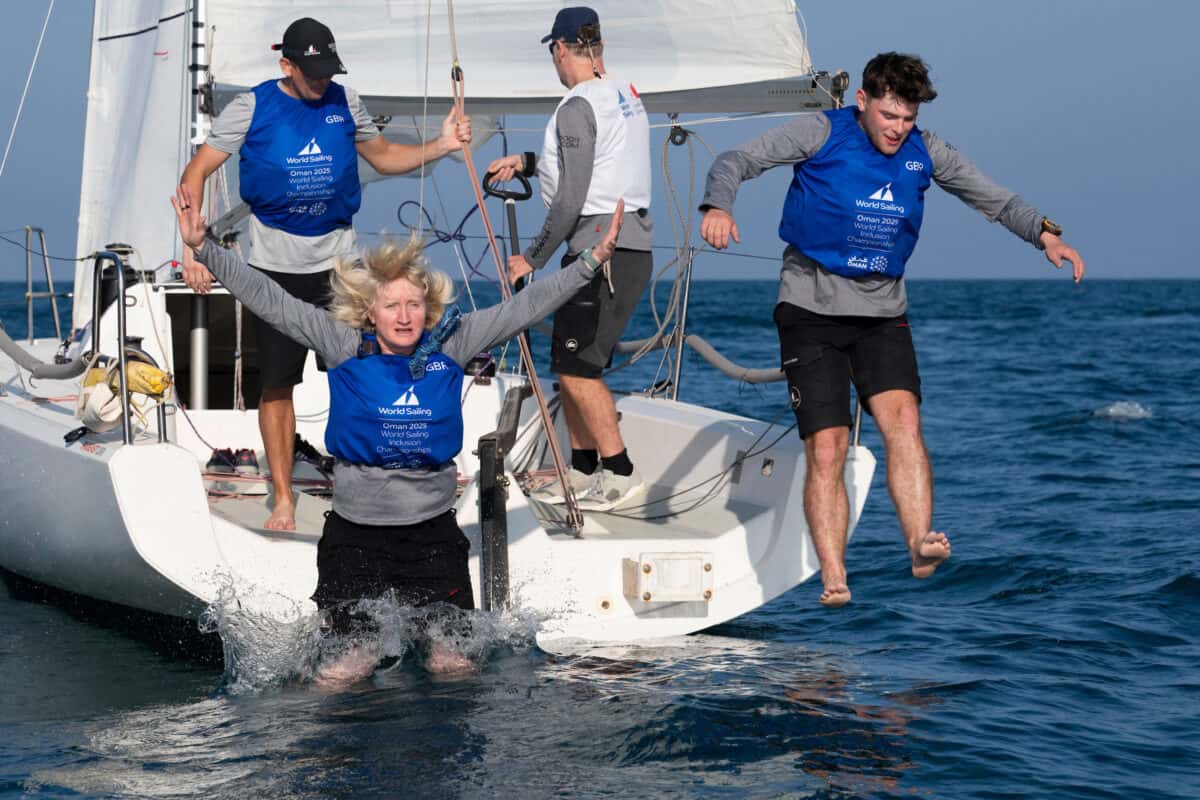
Inclusive sailing is not about lowering standards or creating shortcuts. It is about removing barriers so that more people can access our sport safely, meaningfully, and with dignity, while protecting the integrity and credibility of competition. Done well, Para Inclusive Sailing shows what sailing can be at its best: open, ambitious, and genuinely welcoming.
As Para Inclusive Sailing continues to grow globally, so too does the diversity of athletes, impairments, formats, and event structures. This includes sailors with physical impairments, visual impairments, intellectual impairments, and cognitive or neurological impairments, all of whom may require different forms of adaptation, structure, or support to participate fully. This growth reflects the Limitless potential of our sport, but it also brings responsibility. Without clear definitions and shared understanding, well-intentioned inclusion can become inconsistent, confusing, or unfair, for athletes, organisers, and officials alike.
World Sailing will shortly publish updated guidance on Para Inclusive Sailing definitions, eligibility, and crew composition. This guidance is designed to provide clarity where it is most needed, while keeping Para Inclusive Sailing open, welcoming, and purpose-led.
At the core of the guidance is a simple but critical principle: inclusion is about access, not advantage. Inclusive participation exists to remove barriers for sailors who require adapted environments, structures, communication methods, or support to participate and compete meaningfully, regardless of impairment type. It is not intended to provide a competitive edge, nor to replace mainstream competition where no adaptation is required. This distinction is essential if sailing is truly to be for everyone.
The guidance clearly distinguishes between:
It also provides practical direction on crew composition and the role of support sailors, reinforcing that support exists to enable access, safety, and confidence, not to influence racing performance. These safeguards are what allow Para Inclusive Sailing to remain both welcoming and credible, protecting Para titles while enabling Inclusive and supported pathways to flourish.
This work is about confidence and consistency. Confidence for athletes that the system is fair and transparent. Confidence for organisers that they are delivering events with integrity and clarity. And confidence for the wider sailing community that Para Inclusive Sailing is being developed thoughtfully, sustainably, and in line with the Limitless vision for the sport.

The guidance will be published shortly in draft form, and we want to hear from you. Sailing is strongest when it is shaped by those who live it. Feedback can be shared by:
Athletes, coaches, officials, organisers, and administrators all bring valuable lived experience. Your insight will help ensure this guidance reflects our shared belief that sailing is for everyone, and that inclusion, done well, can truly be limitless.