February 10, 2026
2 minutes reading time

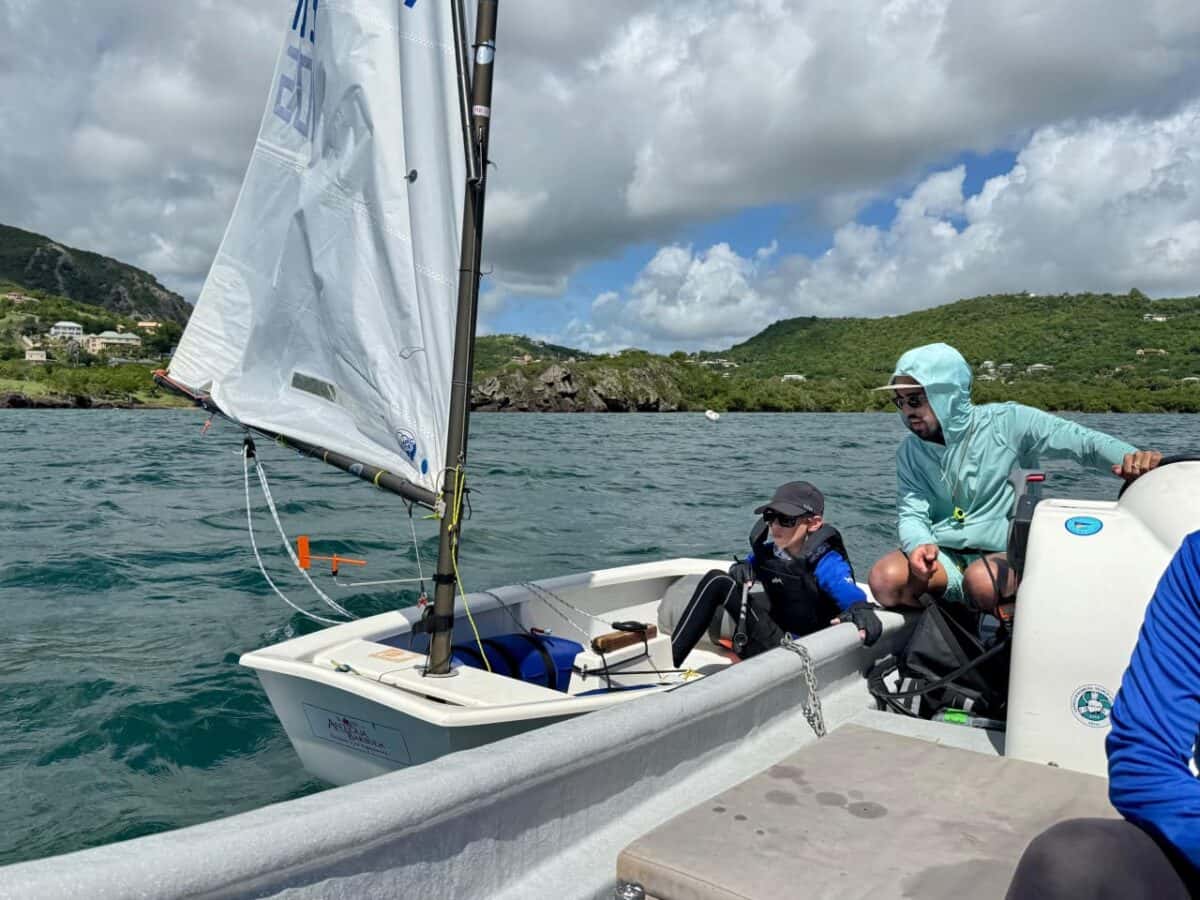
For his coach, Kristof Stüven, the World Sailing Inclusion Championships and IDP were not only a breakthrough moment for one athlete, but a clear demonstration of how structured inclusion pathways can unlock potential across an entire region.

The World Sailing Inclusion Championships and Inclusive Development Programme (IDP) in Oman represented a defining moment – not only for Justin as an athlete, but for the future of Para inclusive sailing in Trinidad & Tobago and the wider Caribbean.
I supported Justin in a dual role: as his coach and as a developing World Sailing classifier. From both perspectives, this experience reinforced a core belief of mine; that talent exists everywhere, late entry into sport does not limit potential, and inclusion pathways work when they are structured and intentional.
One of our biggest challenges was preparation. In Trinidad & Tobago, we do not currently have access to a Hansa 303, so Justin trains primarily in a C420. Transitioning to a completely different platform, while simultaneously learning racing rules, starting sequences, fleet awareness, and regatta procedures, all in a very short space of time was demanding. Racing itself was entirely new to him.
Confidence was another key step. Justin had never raced before this event, and the World Sailing Inclusion Championships marked his first-ever regatta. Helping him believe that he belonged on the start line alongside experienced international sailors was just as important as any technical adjustment.

The moment that stood out most for me was one of Justin’s final races, where he placed second. It wasn’t something we expected, but it was a powerful confirmation of his growth, adaptability, and resilience. Seeing that result as his coach was incredibly rewarding and reaffirmed what is possible when opportunity meets commitment.
From a classification and development perspective, the IDP was invaluable. It demonstrated how critical early exposure, correct classification, and targeted support are to athlete progression. These systems work – and they are essential for expanding Para inclusive sailing globally.
Looking ahead, we are especially excited about the upcoming IDP in Antigua. This will play a tremendous role in strengthening Para inclusive Sailing across the Caribbean and has the potential to kick-start an entirely new regional movement. The Caribbean is already a well-established sailing region, uniquely positioned with year-round sailing conditions, and the IDP in Antigua provides a powerful opportunity to extend that legacy into Para inclusive pathways.
My vision extends beyond one athlete or one nation. I am actively working to bring the Caribbean together around Para inclusive sailing, engaging countries such as Antigua, Barbados, St. Vincent, Grenada, and others to place Para sailing on their development radar. A major goal for 2026 is to support athlete identification, classification, and pathway development across the region, aligned with World Sailing’s long-term objectives.
This experience reaffirmed why Para inclusive sailing matters. When barriers are removed and pathways are clear, athletes don’t just participate – they thrive.
By Kristof Stüven