December 8, 2025
3 minutes reading time

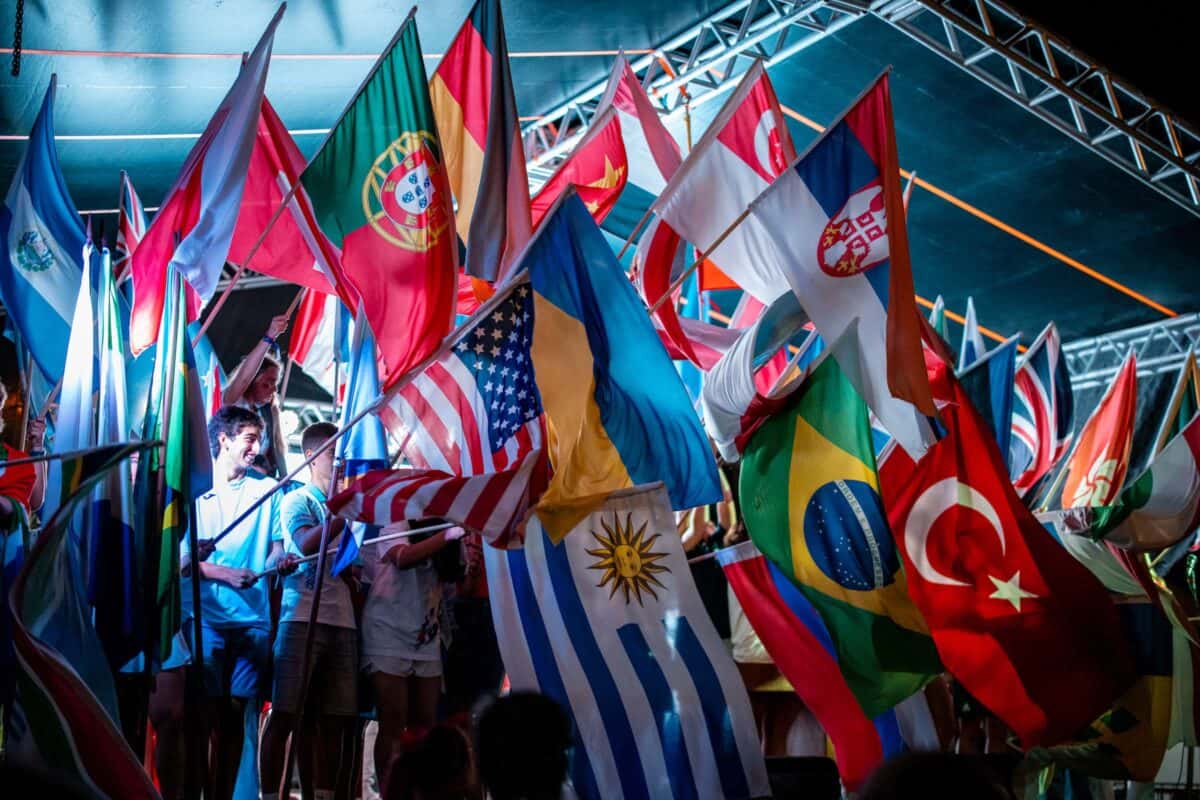
The prestigious competition began in 1971, when 16 nations took part, and has since grown to the extent that more than 400 sailors from 70 countries were represented in Lake Garda last year.
The event is a proven breeding ground for senior international success and this year’s edition, which takes place between December 12-20, will provide the next generation with invaluable competitive experience as they take the next steps on their sailing journeys.
Eleven events will take place across six classes – 29er, 420, ILCA 6, Nacra 15, Formula Kite, and iQFOiL.
The Youth Sailing World Championships mirror the Olympic format and bring together the world’s top youth athletes in male, female, and mixed categories.

Events are open to sailors aged above the age of 12 years and under the age of 19 years on 31 December 2025.
This year, eleven sets of siblings will compete including two on the German team alone – Marie and Antonia Schwarz, who topped the U17 standings at October’s 29er EuroCup finals in Lake Garda, and Tizian and Julian Lembeck.
Austria’s team also contains two sets of 29er siblings in the form of Antonia and Charlotte Senger-Weiss, and Moritz and Felix Schauer.
The medallists at the Youth Sailing World Championships read almost as a who’s who of those to have gone to achieve great things.
Luis Doreste and Russell Coutts were among the first to do ‘the double’, following up youth success with Olympic gold, while Robert Scheidt backed up his laser victory at the 1991 Championships with two Olympic and eight senior World Championship golds.
Ben Ainslie, who won laser gold at this event in 1995, went on to top the Olympic podium on four occasions and the trend has continued into the 21st century, with Elise Rechichi and Tessa Parkinson, along with Nathan Outteridge and Ben Austin, among those who have made a smooth transition to senior podiums after Youth Sailing World Championships victories.
France are the most successful nation in the history of the competition having won a record 76 medals: 28 gold, 30 silver and 18 bronze. They have won the Nations Trophy, introduced in 1991 for the best performing country, on 11 occasions.
Italy have a recent stronghold on the Nations Trophy and are going for their third in a row after retaining their crown on home waters in 2024.

Sustainability will again be at the heart of the World Youth Sailing Championships.
The facilities at Vilamoura are fully powered by solar energy and the event will focus on eliminating single-use plastics by providing access to water stations and reusable containers.
Additionally, there will be an emphasis on digital communication to reduce paper waste, alongside encouraging eco-friendly transportation options including electric robotic marks and organisational boats.
Materials produced for the event will be designed for reuse at future events, and recyclable materials will be prioritised throughout the Championship.
You can follow the championships on the World Sailing social media channels and the Youth Sailing World Championships website.