December 4, 2025
4 minutes reading time

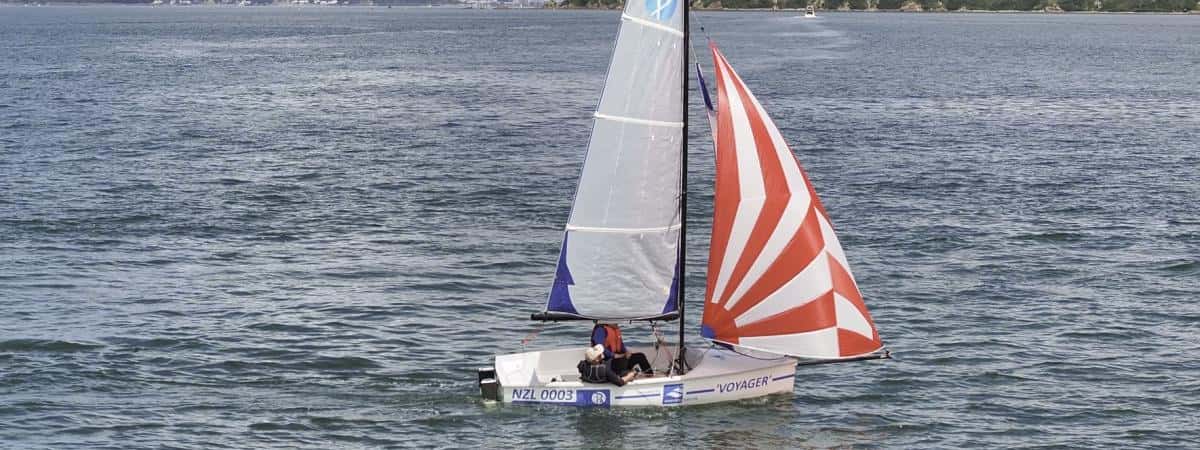
The moment Yachting New Zealand formally recognised the ParAble boat as part of its fleet was a significant one for Don Manning, the chief executive of the Sailability Wellington Trust. “It’s been a long time coming,” he reflected. “What started out as a passion project has taken on a life of its own. But when you finally see the boats in the water and people enjoying their time sailing them—that’s when you know it’s all been worth it.”

The Sailability Wellington Trust is a volunteer-led organisation with a clear mission: to make sailing accessible for people with disabilities. It operates from three locations—the Evans Bay Yacht and Motor Boat Club, Seaview Marina, and Titahi Bay Boating Club—and now supports more than 200 sailors in regular sessions. Manning noted, “If the weather’s good, we’re out six days a week.” The steady growth in participation numbers is testament to the organisation’s impact.
Manning is keen to emphasise the ethos of the group. Rather than limiting their focus to ‘sailing for the disabled’, they prefer the term ‘inclusive sailing’. “It’s about getting everyone out on the water—sailors and the 70–strong support crew,” he explained. This inclusive philosophy has driven the ParAble project from the start.
For years, the Hansa 303—a reliable two-person vessel—formed the backbone of Sailability Wellington’s fleet. However, it has limitations. “The Hansa 303 is registered for a payload of only 160kg,” Manning pointed out. “That’s fine for some of our sailors, but for others—especially when you have a sailor and a crew—it’s just not enough. We needed something bigger, more challenging to race, and something that could be launched straight off a beach trolley.”
This need sparked the concept for a new class of boat and marked the start of a 13-year journey. Initial discussions with Hansa in 2012 about developing a larger boat did not progress, as the challenge was deemed too great. Undeterred, a group of volunteers decided to tackle the project themselves, seeking advice from the late designer Bruce Askew. After thorough testing and assessment, Askew provided the blueprint for what would become the ParAble.

Kevin Cudby, a local designer and computer expert, joined the team and developed an innovative hull shape—first tested in computer simulations, then on the water. In 2013, volunteers began building the prototype from western red cedar, and after three years, the first fibreglass hull mould was ready. The project relied heavily on the generosity and expertise of local businesses such as Carboglass Mouldings and Tory Channel Construction, who contributed time, materials, and skills to build the prototypes and lay the groundwork for future production.
Progress was not without setbacks. The team had to build new infrastructure, such as a floating pontoon and storage shed at Titahi Bay, and paused work to organise major regattas, including the 2020 Hansa national event. The Covid-19 pandemic also caused delays. During this period, the trust acquired more Hansa 303s to meet demand, but the vision for a new class remained strong.
Collaboration with Mackay Boats, renowned for their Olympic-level dinghies, was pivotal. They supplied a bulb centreboard, rudders, and a custom-designed mast, while Doyle Sails in Auckland produced the sails. The result was a well-balanced, one-design sail, with refinements ongoing. The first production models were delivered to the Seaview shed a month ago. Thanks to Mackay Boats’ expertise, the hull weight was reduced from over 140kg to about 100kg, making the boats more accessible and practical.
The ParAble offers a blend of accessibility and performance. The 4.1m boat has a self-draining cockpit, a 240kg payload, and can be launched directly from the beach using a trolley. “No cranes, no fuss,” Manning said—making sailing safer, quicker, and more accessible. The design accommodates flexible seating and sail configurations, catering both to beginners and advanced racers.

The project’s success is thanks to a large, committed base of around 15 volunteers, whose time, skills, and financial support have been invaluable. Together, they have raised over $600,000, with more still needed to complete the project. Notably, para sailor Chris Sharp, a 2016 Rio Paralympian, played a key role in testing and refining the boat and its sail designs, helping perfect the setup with his expert feedback.
With Yachting New Zealand’s official recognition, the ParAble class can now host national championships, with the first planned for March or April next year at Seaview. A second series will focus on sailors with intellectual impairments, and additional regattas are being planned for vision-impaired sailors and older participants. International interest is growing, with enquiries from Australia, the UK, the US, and Greece.
Manning believes the project’s potential is only just beginning, with the official launch celebration and regatta already being planned. “The dream is to see this boat all over the world, with as many sailors as possible enjoying the sport. It’s about inclusivity—that’s what the name stands for. We wanted to remove a few more barriers so more people can experience the freedom of sailing. If we’ve achieved that, then I can die happy.”
Original article published by Yachting NZ.