April 9, 2025
6 minutes reading time

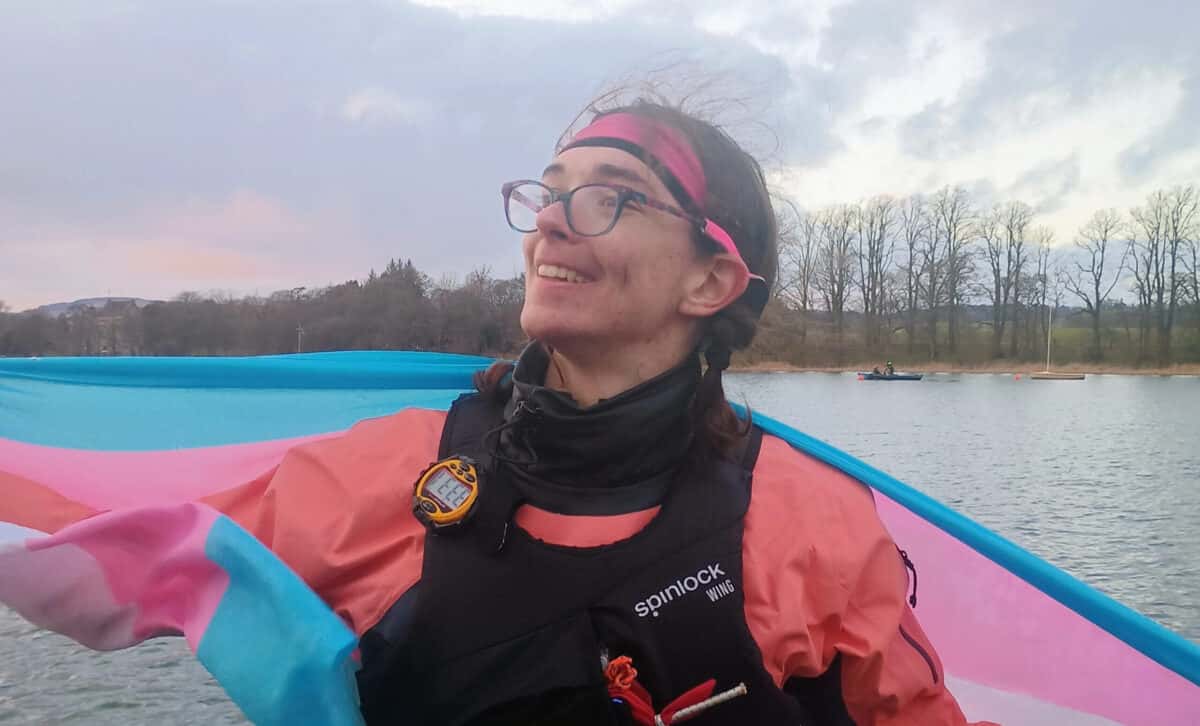
Hannah Stodel: Bex, let’s start at the beginning – how did you first get into sailing?
Bex Foulsham: If we go back a few years, I absolutely hated sport. PE was the worst, and I had no interest in it whatsoever. But I was lucky that, after a difficult start to my education, I had the opportunity to go on a trip with the Island Trust. They run sailing experiences on these beautiful, traditional wooden boats out of Plymouth. I went on one of their trips with my school, and I absolutely loved every second of it – except when we were ashore!
I got home and couldn’t stop talking about it, so my parents asked if I wanted to get into sailing. Fortunately, we knew someone around my age who had both neurodivergent and physical conditions and was sailing with the local Sailability program. It made sense for me to start there rather than on a traditional junior course with lots of other kids, which would have been overwhelming. My first experience was in a little Hansa 2.3, and I just sat out there for two hours straight with a buddy in the boat. From then on, it just grew. Eventually, I started sailing single-handed, won the RYA Sailability Sailor of the Year award in 2020, and moved into faster boats, racing, and instructing.

Hannah: You’ve spoken a lot about inclusion and how it’s not just about boats but about people. Can you elaborate?
Bex: One of the biggest things the Para and inclusive sailing community can do is shift the focus from being boat-centred to person-centred. A lot of inclusive sailing has developed around adapting boats for physical accessibility, which is really important. But inclusion isn’t just about getting someone in a boat – it’s about how we support individuals as people.
For me, a huge shift came when I started putting my name, Bex, on entry lists. It gave me an enormous confidence boost. I also started having more open conversations about anxiety and my experiences as an autistic sailor. In a team setting – like when I sail a Sonar -it can be difficult because working in a team isn’t always easy for autistic people. I sometimes still literally dive into the front hatch when I am overwhelmed! But with the right support, we can create environments where people feel safe to be themselves, and that’s when performance improves.
Hannah: You’ve been open about your journey with gender identity. Can you share how that has intersected with your sailing experience?
Bex: I am a trans woman, though I’ve never really fit into binary definitions. I always knew something was different about me, but I didn’t have the language for it. Puberty was incredibly uncomfortable, but I assumed all boys felt that way. It wasn’t until university that I started questioning my identity more seriously. I studied history and politics, and reading about feminism and social constructs made me reflect on myself.
Sailing, interestingly, has been one of the places where I feel the most myself. A lot of people say that when you step onto a boat, you “leave everything on the dock” and just become a sailor. But for me, it’s the opposite – on the water, I am unashamedly myself. Nobody is questioning me, and I can just be me.

Hannah: Last year, we introduced the concept of self-certification at the RS Venture Connect Inclusion Championship, allowing sailors to define their own eligibility for inclusive categories. There was debate about whether people should be allowed to self-define. Where do you stand on that?
Bex: I fully support self-certification. The reality is that individuals know themselves best. There’s this weird fear that if we let people self-certify, suddenly able-bodied men will start dominating inclusive events. That’s just not going to happen. Most people are too good for that.
I’m recently competed in my first women’s team racing event at Strathclyde, and my helm, who is also our club’s welfare officer, did a lot of work behind the scenes to ensure I could enter. In the end, the response was, “You’ve researched this more than we have – you know what you’re talking about.” That’s the point. People know their own identities, their own abilities, and what spaces they need to feel included.
Hannah: The Para inclusive sailing community has become a safe space for so many. Do you see it as a home for wider inclusion?
Bex: I’d like it to be. But inclusion isn’t just about having accessible boats – it’s about culture. If you’re disabled, young, a woman, or LGBTQ+, you’ve probably experienced that kind of sailor who talks down to you or dismisses you. That’s what needs to change. True inclusivity comes from creating a culture of understanding and empathy.
For example, protest hearings in racing need to account for disability. There are many conditions that affect processing speed or mobility, but protest committees don’t always recognise that. Inclusion isn’t just about who gets to compete – it’s about how the sport accommodates different needs at every level.

Hannah: So, looking forward, what’s your vision for the future of inclusive sailing?
Bex: I think we’re mostly heading in the right direction, but we need to keep pushing for a person-centred approach. Too often, supported sailing has been about, “How do we make boats accessible?” instead of, “How do we make sailing as a whole inclusive?” The goal should be an environment where anyone – regardless of disability, gender, or background – can be themselves and achieve what they want on the water.
Take my upcoming challenge, sailing a Challenger around the Isle of Wight. It’s a huge undertaking, requiring not just physical preparation but also a lot of support – both logistically and emotionally. But that’s what inclusion should be about. It’s not just about the boat I’m sailing – it’s about recognising and addressing the different challenges I face and making sure I have the right support to succeed.
Hannah: If you could give one message to the sailing community, what would it be?
Bex: Listen to people. Inclusion starts with recognizing that individuals understand themselves best. If we truly want to make sailing inclusive, we need to stop making top-down decisions and start listening to the people who are affected. It’s about allowing individuals to define their own experiences and ensuring that we create spaces where everyone can thrive.
Hannah: That’s a powerful message, Bex. Thank you for sharing your story with us – I can’t wait to see where your journey takes you next!
Bex: Thanks, Hannah. I appreciate the opportunity to have this conversation!