March 6, 2025
4 minutes reading time

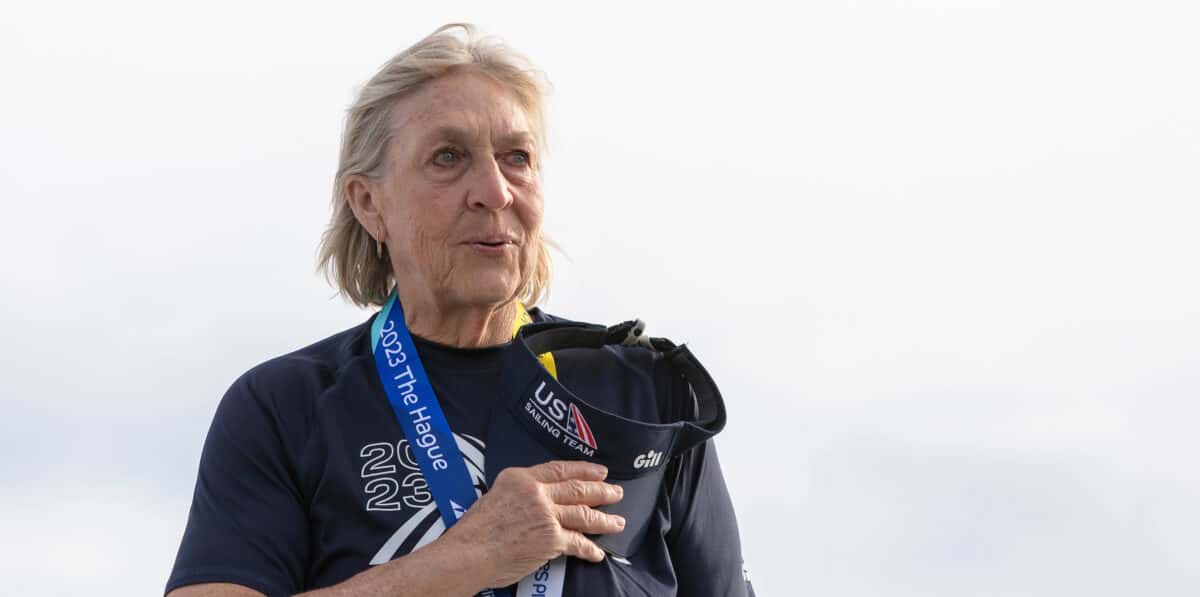
In 2015, Para Sailing lost its place in the Paralympic Games meaning that Rio 2016 was the last hurrah, but also the start of the long road back.
Betsy first got involved with Para Sailing in 2013, joining the Executive Committee of the International Foundation for Disabled Sailing (IFDS), which she says was “very small, very centralised” with few resources.
“There was the feeling, because the committee was so small and driven by volunteers, we were limited and not really recognised. So back in 2013 we started having discussions with ISAF, and there was a submission put forward to establish a disabled sailing committee within ISAF itself,” Betsy explains.
“Joining John Twomey – an 11-time Paralympic athlete and sailor with Ireland – and Dr Bernard Destrubé, Vice President of the IFDS and member of ISAF’s Medical Commission, we collaborated with the ISAF team of Jerome Pels, Chris Atkins and W Scott Perry to facilitate the merger of the disabled sport within the International Federation. Sailing was one of the first IFs within the IOC to fully embrace Para/disabled athletes within its working structure.”

This work resulted in a merger between the IFDS and ISAF, which became World Sailing in 2015 – approximately eight months before the Rio 2016 Olympic Games. Betsy was invited to chair the new committee working with the World Sailing Board to ensure Para Sailing became a topic on the radar of every national federation and every Council member.
She says, “When I look back 10 years, in those early days it was like a mountain I felt that I had to climb. But I was so passionate about this part of the sport that I thought one of the first challenges was to make sure that at the end of my tenure, however long that would be, and I had no idea that I was going to be chair for 10 years, that Para Sailing be recognised as an important and integral part of our sport and that sailors with challenges and different abilities were part of the fabric of our community.”
World Sailing was one of the first International Federations to embrace the disabled side of the sport.
“We were ahead of the curve. Using all the same field of play rules, the same governing rules for sport, the same infrastructure from a governance standpoint. It’s been a tough road for reinstatement, even though so much effort has gone into working on and providing the accurate data for a successful bid.”

Despite that disappointment 10 years’ ago, the sport has moved on and is now in a very strong position for reinstatement.
Betsy says, “I think that worldwide acceptance and recognition by our Member National Authorities (MNAs), the Council and the Board that this is an important sector of the sport is one of the biggest changes. It is a mainstream part of our sport now, which is great, and in the strategic plan, from the development side all the way up through elite competition. The fact that we just held a combined World Sailing Championships where the Para Sailors were competing at the same time as our Olympic classes was a fantastic feather in the cap of World Sailing.”
World Sailing is targeting the Brisbane 2032 Paralympic Games for the sport’s return, and another of the great strides over the past decade will be a key part of the bid.

“One of the other biggest changes I’ve seen is on the development side. We held the first Para Sailing Development Program (PDP, now known as IDP), in Weymouth in August 2015, and seeing how that has grown and developed into participation by a multitude of MNAs, allaying some of the concerns and fears, and enabling developing countries and less developed nations to establish new national programs, I think that has been a fantastic effort that this committee has pushed forward,” she says.
“The first strategic plan for Para Inclusive Sailing that we worked on in the last quad also took a massive amount of effort, but for us to have been able to align that within the goals and aims of World Sailing, and to publicly publish that in support of this segment of the sport, and it’s everything. It’s the effort, not only from events, but the development side, and the communications that go out to sailors and MNAs and the general public, I think those are all aspects that I’m so super proud of.
“Everything takes time, we want sports to be more inclusive, and it’s been 10 years of investment. We’ve been sailing inclusively forever, leading in this space 20 years ago, when para sailors started training and competing against able bodied sailors in Sonars and 2.4mRs, but now, we are trying to be methodical about providing accurate data and making it clear to the IPC that sailing is worthy of being in the Games.”
Para Inclusive Sailing now has a worldwide reach of 34 countries in four IPC regions, and the World Sailing Para Inclusive Sailing Strategy 2024-2029 aims to increase this to 40 nations on five continents.